2025
Replacing core enterprise systems
Design leadership under high-stakes and high-pressure constraints

TL;DR
In 2025, MYOB undertook a huge challenge of replacing three core enterprise systems in a single year. It required collaboration from almost all areas of the business.
As Principal Designer, I led a cross-disciplinary design team of four designers through a year of high-stakes, high-constraint delivery.
I helped teams frame the right problems, make difficult trade-offs, and maintain a customer-centric perspective in a program that could easily have lost sight of the user entirely. I also delivered directly, for example, redesigning the account management portal, establishing a service design mapping framework, closing a critical gap in the checkout and payment experience, and building a scalable transactional email system.
Bedrock shipped on time. The design team matured. And the foundations for MYOB's next phase of experience investment are now in place.
Key contributions
Design leadership
Shaping the product and design direction
Design strategy
When, where and how to play
Stakeholder engagement
Leading customer-focused discussions
Hands-on experience craft
Delivering with agile teams
Context
By the end of 2024, legacy ERP, CRM, and Billing systems had accumulated decades of technical and operational debt at MYOB. Product innovation was nearly impossible because back-end changes were slow, expensive, and required highly specialised skills. Internally, support, sales and finance teams were manually cross-referencing data across multiple disconnected systems just to do their jobs.
After a series of previous isolated attempts by individual business areas to fix their own piece of the problem, the organisation recognised that the answer had to be systemic.
What followed was one of the most ambitious transformation projects in MYOB's history: replacing a series of core enterprise systems (ERP, CRM, and Billing) within a single year. The goal was to reduce technology risk, improve operational efficiency, and unlock future product innovation.
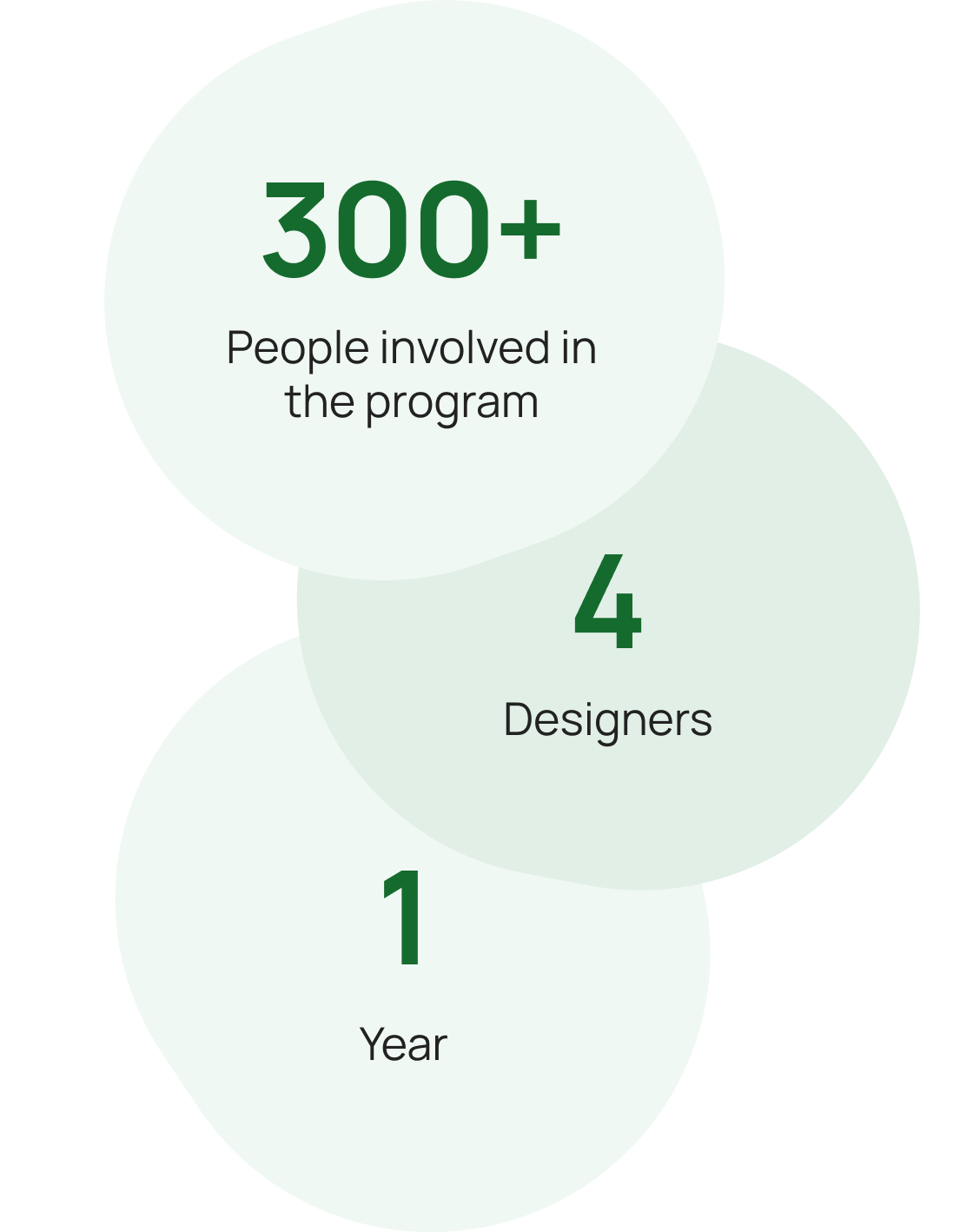
The scale, complexity, and unrelenting timeline proved to be very challenging to 300+ people involved in this project. Time was the binding constraint on every decision.
My participation
As Principal Designer, I operated at the intersection of strategy, delivery, and people leadership.
My role went well beyond traditional design execution. I functioned as a strategic partner to the product side of the program, framing what problems were worth solving, when to act, and when to hold back.
I led a design team of two Product Designers, one Service Designer, and one UX Writer.
Contributions


Getting teams ready for success
In partnership with the Head of Engineering and Senior Product Manager, we established the foundations for our teams to achieve the necessary results, framing the challenges, goals and delivery expectations to teams and internal stakeholders.

Setting design direction across the program
I established clear responsibilities for each designer on the team, ensuring everyone had ownership and clarity in an environment that was frequently ambiguous and fast-moving.

Bringing customer-centric view to conversations
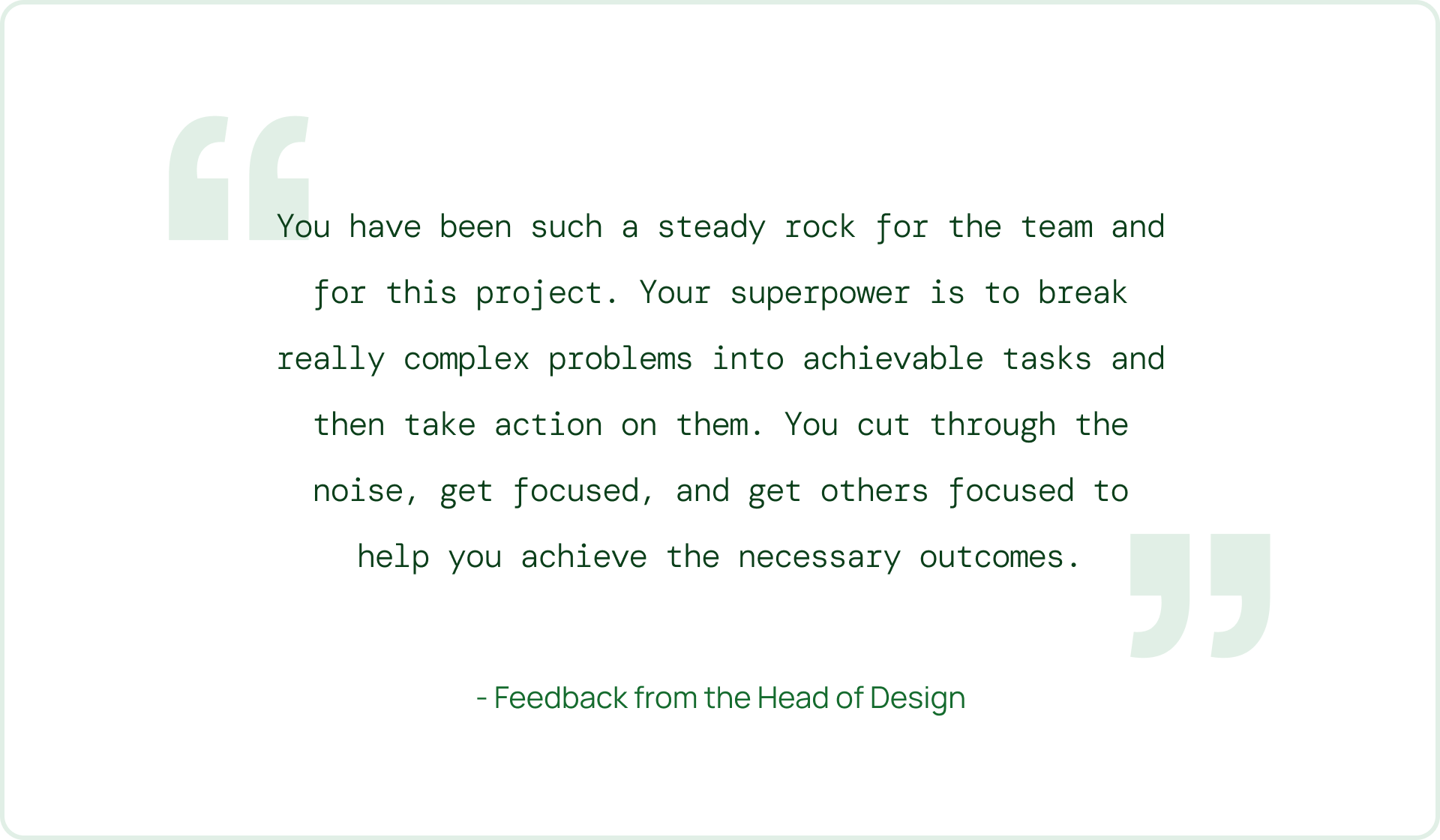
Program members relied on my expertise for topics related to customer experience. I helped teams with clarity and prioritisation, translating ambiguity into direction.

Bridging the gap with delivery partner
I onboarded external teams, helped them navigate MYOB's business context, and provided structured feedback to strengthen the working relationship and improve output quality.

Maintaining momentum and morale
In a project defined by constraint, I kept the team focused on progress over perfection, helping designers understand that their impact was structural and lasting, even when individual wins felt small.

Coaching and feedback
I helped the design team navigate their concerns and anxieties in an ambiguous space where design participation was not traditional.

Jumping in and crafting experiences
The program was an extensive collection of moving parts and dependencies. To protect the design team from context switching, I strategically handled problems and unplanned work by myself.
Design team challenges
Ruthless prioritisation under pressure
The project demanded a level of prioritisation that is genuinely uncomfortable for designers. The question was rarely what is the best solution, but what is achievable given these constraints. Trade-offs were non-negotiable, and some design problems simply could not be solved at the standard the team wanted. Early on, that created real frustration.
My focus was on helping them see that keeping things moving without breaking trust with users, and keeping the ultimate goal in mind were much more important challenges than individual wins.
Context switching
The magnitude of the project forced all team members to be able to handle multiple topics in parallel, which could quickly be overwhelming, impacting the quality of the work. I acted as a buffer protecting the team from external inputs, separating what was necessary at the moment, what should be done later, what should not be done, and what I could solve personally.
Systems thinking
No decision existed in isolation. Solving a problem in one area could create friction in another, and maintaining a coherent customer experience required everyone to think beyond the immediate issue. I helped the team connect with different areas of the business, reducing the chance of assumptions and unknowns creating more issues down the line.
How design added value

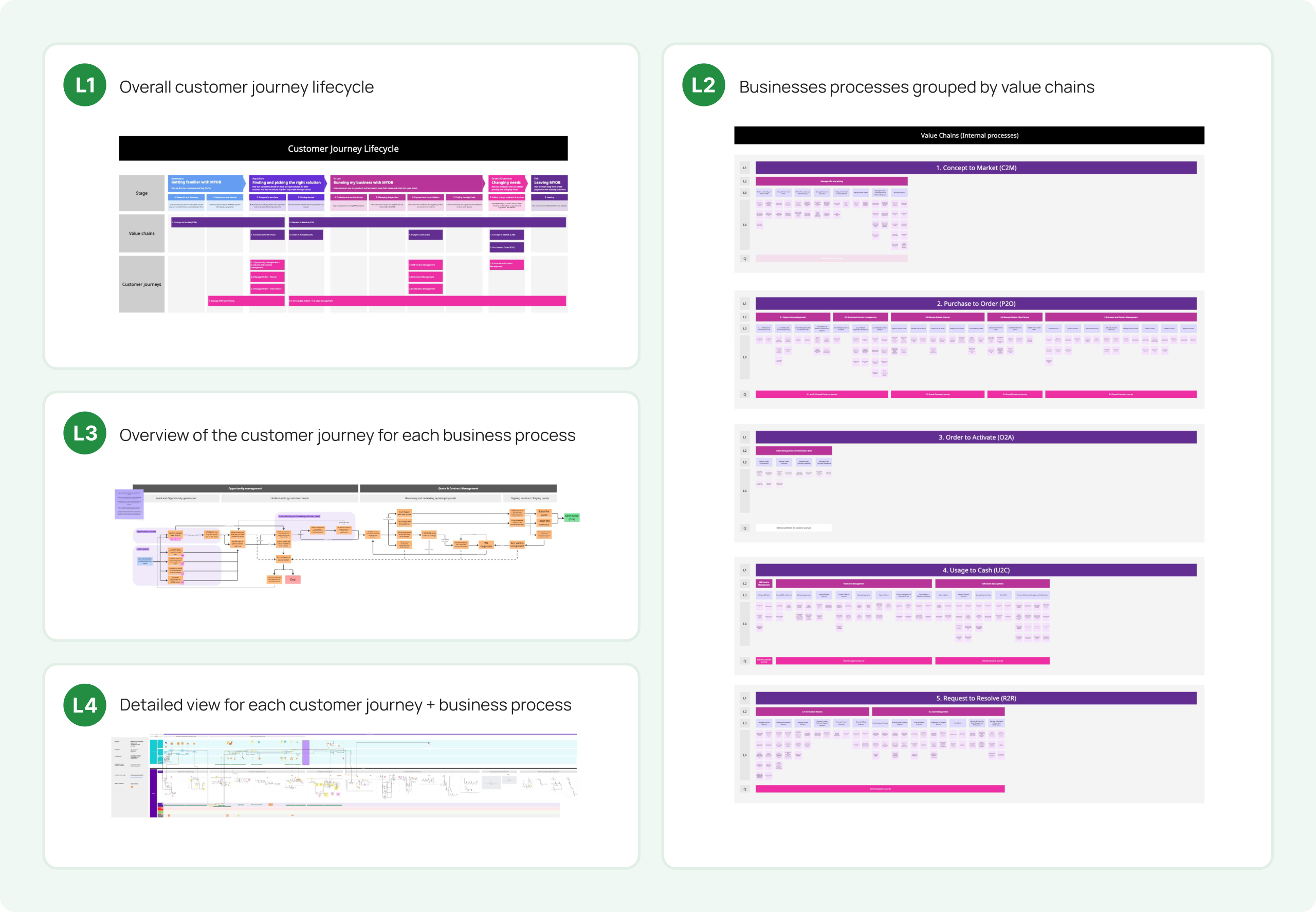
Mapping current and future states
Identifying and documenting workflows connected to systems being updated. Workshops involving cross-functional representatives to capture multiple perspectives.

Translating tech solutions into customer impact
Converting back-end decisions into customer-facing workflows and evaluating them from the user's point of view.

Documenting experience debt
Capturing the design compromises made across all working areas to ensure they are visible and actionable for future investment.

Trade-off analysis
Assessing the tension between technical constraints and customer experience to inform better decisions.

Scoping the migration
Determining what needed to be carried forward into the new systems and what should be discontinued.

Alignment and visualisation
Visual artefacts helped teams stay aligned in relation to the problem to be solved and the possible solutions.
Some of my projects along the year
Besides my leadership and strategic contribution to the program, I also led several projects. The examples below highlight the nature of my role in the organisation, often jumping into an unknown space, bringing clarity to the problem, and working collaboratively towards an appropriate solution.
Fewer legacy systems, higher design maturity, and a clear roadmap for 2026
Delivery. The Bedrock program shipped and the old systems were successfully sunset. Internal teams can now do their work in far fewer systems than before. For a transformation of this complexity and timeline, that outcome alone represents an extraordinary organisational achievement, and design played a tangible role in making it possible.
Team maturity. Individual designers grew significantly productive. One team member in particular, who started the half-year frustrated and disengaged, channelled that energy into a growth mindset. A shift directly connected to our honest and thoughtful conversations.
Cross-functional design influence. Over the course of the year, I extended design thinking and support into many different parts of the business, some of them who never interacted with a designer before. These partnerships were built through credibility and action, not title.
Strategic foundations for 2026. The experience debt incurred during the program has been documented and communicated to the right owners across the business. The Customer Journey and Business Process Maps provided an immediate starting point for the next phase of experience investment.